
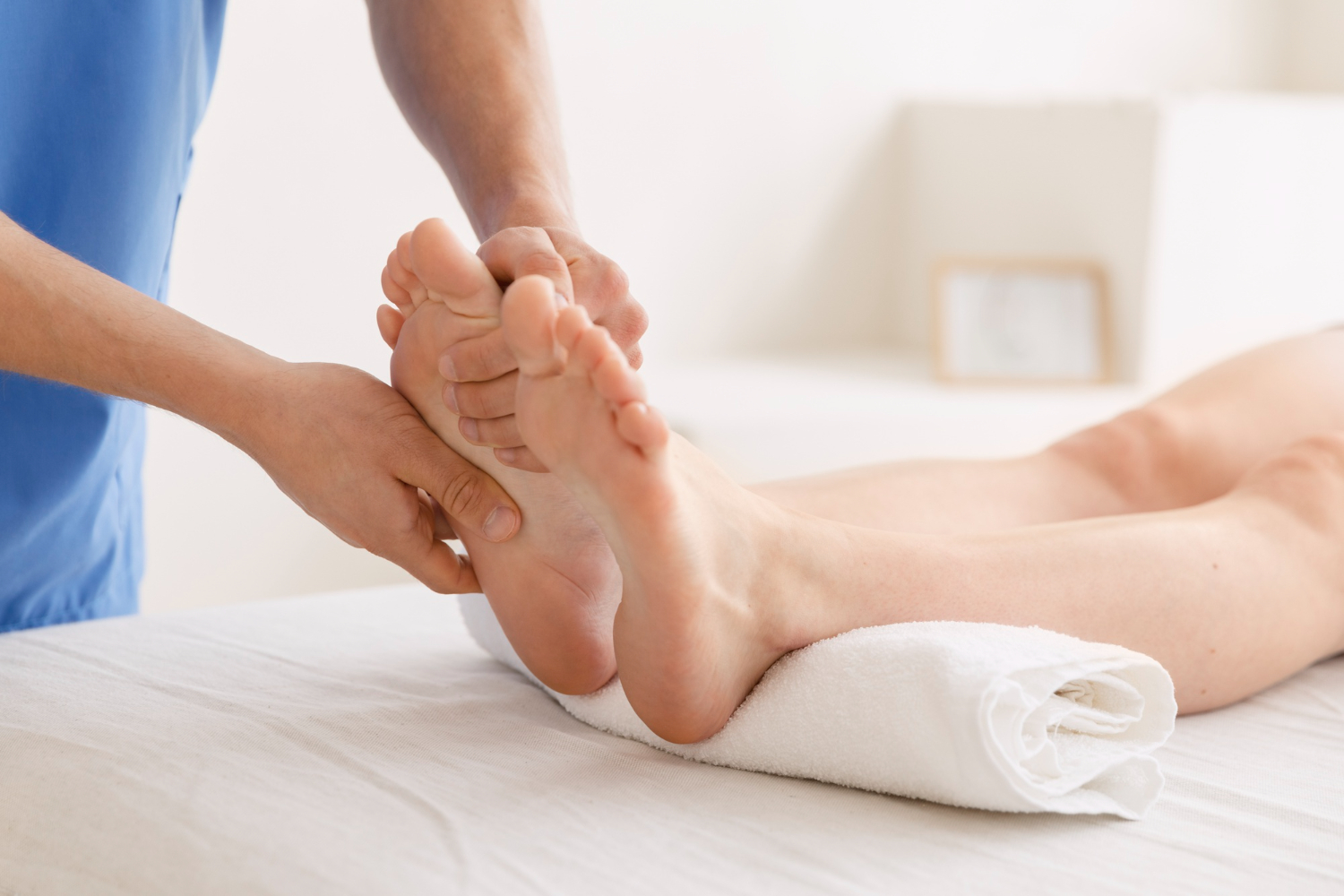
Regenerative Medicine at Walk NYC Podiatry
Harnessing the body’s own healing potential to repair damaged tissue, reduce pain, and restore function — without surgery and without simply masking symptoms.
The human body has a tremendous innate capacity to heal. The challenge is that chronic overuse, repetitive stress, aging, and delayed treatment can overwhelm or exhaust that natural potential — leaving tissue in a state where healing has stalled, slowed, or become incomplete. Regenerative medicine works by listening to the body and supporting what it is already trying to do — optimizing its own healing mechanisms and, at times, nudging them in the right direction.
At Walk NYC Podiatry, regenerative therapies are not offered as a standalone solution or a last resort. They are integrated into a comprehensive, individualized treatment plan — used strategically alongside biomechanical correction, orthotic therapy, laser treatment, nutritional support, and targeted rehabilitation to create the conditions in which the body can heal as completely and efficiently as possible.
Located on Park Avenue in Midtown Manhattan, steps from Grand Central Station, Walk NYC Podiatry offers a carefully curated range of regenerative therapies selected for their clinical evidence, safety profile, and relevance to foot and ankle medicine specifically.
What Is Regenerative Medicine?
Regenerative medicine encompasses a range of therapies designed to support, stimulate, and optimize the body’s natural tissue repair processes at the cellular level. Rather than suppressing symptoms or compensating for tissue damage, regenerative treatments aim to address the underlying biological problem — promoting actual repair and regeneration of damaged tendons, ligaments, joints, and soft tissue structures.
In foot and ankle medicine, regenerative therapies are particularly valuable for conditions where conventional treatment has plateaued, where tissue healing has been slow or incomplete, or where patients are seeking to avoid or delay surgical intervention.
Regenerative Therapies at Walk NYC Podiatry
DPMx — Umbilical Cord Tissue Allograft
DPMx is a foot-specific regenerative therapy derived from donated human umbilical cord tissue — one of the richest naturally occurring sources of growth factors, collagen, hyaluronic acid, cytokines, and structural proteins involved in tissue repair and regeneration.
Unlike cortisone injections, which reduce inflammation temporarily but do not repair damaged tissue — and can weaken tendons and ligaments with repeated use — DPMx works at the biological level to support actual tissue healing. It does not introduce foreign substances into the body. It provides the raw biological materials the body needs to repair itself more effectively.
The umbilical cord tissue used in DPMx is donated by healthy mothers following scheduled deliveries, processed by accredited US tissue banks, and undergoes rigorous screening for safety and donor eligibility. It is minimally manipulated and retains its natural biological activity.
DPMx is administered as a targeted injection in the office setting, typically with local anesthetic for comfort. The procedure is minimally invasive, requires no hospital visit, and involves minimal downtime.
Conditions where DPMx may be indicated include:
- Chronic plantar fasciitis
- Achilles tendinopathy
- Posterior tibial tendon dysfunction
- Peroneal tendon injuries
- Chronic ankle instability
- Ligament injuries
- Osteoarthritis of the foot and ankle
- Neuromas
- Capsulitis
- Conditions that have not responded adequately to conventional conservative treatment
RedVive — Red Light Therapy / Photobiomodulation, PBM
Red light therapy – clinically known as photobiomodulation (PBM) – uses specific wavelengths of red and near-infrared light to stimulate cellular energy production, reduce inflammation, improve circulation, and support tissue repair at the mitochondrial level.
Walk NYC Podiatry uses RedVive, an FDA-cleared medical-grade red light therapy device delivering precisely calibrated wavelengths of 660nm (red) and 850nm (near-infrared) – the wavelengths with the strongest clinical evidence for tissue healing and pain reduction. RedVive delivers therapeutic energy levels with sufficient depth of penetration to reach tendons, ligaments, and joint structures – not just the skin surface.
Photobiomodulation works by activating the mitochondria – the energy-producing centers of the cell – increasing ATP production and triggering a cascade of cellular repair processes. The result is reduced inflammation, accelerated tissue healing, improved circulation, and meaningful pain reduction – without medication, without needles, and without downtime.
PBM is used at Walk NYC Podiatry as part of an integrated regenerative protocol – complementing DPMx therapy, orthotic correction, and targeted rehabilitation to create the optimal biological environment for healing.
Conditions where RedVive PBM therapy may be beneficial include:
- Plantar fasciitis and heel pain
- Achilles tendinopathy
- Chronic tendon and ligament injuries
- Arthritis-related foot and ankle pain
- Peripheral neuropathy
- Post-procedure tissue recovery
- Chronic inflammation and soft tissue conditions
Nutritional & Supplement Support
Tissue healing does not happen in isolation. The biological processes that drive repair – collagen synthesis, cellular regeneration, inflammatory modulation – are directly dependent on nutritional status. Deficiencies in key nutrients can significantly impair healing potential, even when the best regenerative therapies are in place.
At Walk NYC Podiatry, nutritional and supplement guidance is integrated into the regenerative treatment plan where indicated – supporting the body’s healing processes from within and ensuring that the biological environment is as favorable as possible for recovery.
Remy Class IV Laser Therapy
The Remy Class IV laser is a multi-functional therapeutic laser used at Walk NYC Podiatry for pain management, tissue healing, and a range of specific foot and ankle applications. Unlike red light therapy devices, Class IV lasers deliver higher-powered laser energy with deeper tissue penetration – making them particularly effective for deeper structures and targeted therapeutic applications.
Remy Class IV laser therapy at Walk NYC Podiatry is used for pain management and tissue healing as part of the regenerative protocol, and also has dedicated applications in the treatment of fungal toenails, peripheral neuropathy, and plantar warts. Full details are available on the dedicated Remy Class IV Laser Therapy service page.
Why Choose Walk NYC Podiatry for Regenerative Medicine?
Regenerative medicine is a rapidly evolving field – and one where the quality of patient selection, clinical judgment, and treatment integration matters enormously. Offering a regenerative injection without addressing the underlying mechanical, nutritional, and biomechanical factors that contributed to the problem in the first place is unlikely to produce lasting results.
Dr. Barnea’s approach to regenerative medicine is rooted in a simple but important principle – the body has tremendous healing potential. Our role is to respect that potential, create the conditions for it to express itself fully, and provide the biological support it needs when it cannot do so on its own.
As US Medical Officer for GentaGel-LR, a biotech startup developing next-generation antimicrobial formulations for serious infections including onychomycosis and diabetic foot conditions, Dr. Barnea brings a level of scientific rigor and research engagement to his clinical practice that extends well beyond the walls of a standard podiatry office.
Conditions Commonly Treated with Regenerative Therapies
- Plantar Fasciitis
- Achilles Tendinopathy
- Posterior Tibial Tendon Dysfunction
- Peroneal Tendon Injuries
- Chronic Ankle Instability
- Osteoarthritis of the Foot & Ankle
- Neuromas
- Capsulitis
- Peripheral Neuropathy
- Chronic Heel Pain
- Ligament Injuries
- Sports & Overuse Injuries
Insurance & Payment
Regenerative therapies including DPMx, RedVive photobiomodulation, and nutritional support protocols are not currently covered by insurance plans. These are elective biological therapies offered outside of standard insurance reimbursement.
The cost of treatment varies depending on the specific therapies recommended, the condition being treated, and the number of sessions required. Pricing is discussed transparently during the consultation – there are no surprises.
For patients who wish to spread the cost of treatment over time, financing options are available. Investing in regenerative care is, for many patients, a meaningful alternative to the cumulative cost – financial and physical – of repeated conventional treatments that address symptoms without resolving their underlying cause.
Frequently Asked Questions
What makes regenerative medicine different from a cortisone injection?
Cortisone is an anti-inflammatory agent – it reduces pain and swelling temporarily but does not repair damaged tissue. With repeated use, cortisone can actually weaken tendons and ligaments, increasing the risk of rupture over time. Regenerative therapies work differently – they provide the biological materials and signals the body needs to actually repair and regenerate damaged tissue, addressing the underlying problem rather than suppressing its symptoms.
What is Wharton’s Jelly and how does it relate to DPMx?
Wharton’s Jelly is the gelatinous connective tissue found within the umbilical cord, rich in mesenchymal stem cells, growth factors, hyaluronic acid, collagen, and cytokines.
Wharton’s Jelly is the gelatinous connective tissue found within the umbilical cord, rich in mesenchymal stem cells, growth factors, hyaluronic acid, collagen, and cytokines. DPMx is derived from umbilical cord tissue and harnesses these same naturally occurring biological components – making it one of the most bioactive and clinically relevant regenerative materials available for foot and ankle applications. The umbilical cord is chosen as a source precisely because of the exceptional concentration and diversity of healing factors it contains.
Is regenerative medicine covered by insurance?
Currently, regenerative therapies including DPMx and RedVive photobiomodulation are not covered by insurance plans. These are considered elective biological therapies and are priced accordingly. The cost varies depending on the treatment plan, the condition being treated, and the number of sessions required. Pricing is discussed in full during the consultation, and financing options are available for patients who need them.
How do I know if I am a candidate for regenerative medicine?
The best candidates for regenerative therapy are patients who have a confirmed diagnosis, have not achieved adequate results with conventional conservative treatment, are not yet at the point where surgery is clearly indicated, and are committed to the full treatment protocol – which typically includes complementary therapies such as biomechanical correction, laser treatment, and nutritional support. A thorough evaluation is required before any regenerative therapy is recommended.
How many treatments are needed?
This depends entirely on the condition, its severity, duration, and the patient’s overall health and healing capacity. Some patients experience significant improvement after a single DPMx injection combined with supportive therapies. Others benefit from a series of treatments over several weeks. RedVive photobiomodulation is typically administered as a series of sessions. A realistic treatment timeline is discussed at the initial consultation.
Is there downtime after a DPMx injection?
DPMx injections are minimally invasive and most patients resume normal activities shortly after the procedure. Some patients experience mild soreness at the injection site for a day or two, which is a normal part of the biological response. Specific post-procedure guidance is provided at the time of treatment.
How does nutritional support fit into a regenerative treatment plan?
Tissue repair is a biologically demanding process that requires adequate levels of specific nutrients – including collagen precursors, antioxidants, and anti-inflammatory compounds. Nutritional deficiencies can significantly impair healing even when regenerative therapies are in place. Addressing nutritional status as part of the treatment plan ensures the body has the full biological resources it needs to heal as effectively as possible.